
Recipients ask questions during the call
The agent describes the shipment from the order data. The recipient asks it to repeat or explain in ordinary speech, with no keypad menu.
Order and call historyWe developed a calling service on ElevenLabs and an operator dashboard for three American Red Cross distribution centres: Cleveland, Baltimore and Philadelphia. The agent phones the receiving hospital about a dispatched shipment and answers questions in conversation. Operators work from one queue and read a written summary of every conversation.
What changes for the teamDeveloped in November–December 2025
The AWS prototype showed that a dispatch could place the call. But staff at receiving facilities reported ignoring or mishandling calls that felt automated, and then were not ready for the delivery on time.
The three centres serve some of the same hospitals, so one hospital could get several calls about the same shipment from different queues. Every call also had to be logged with what was said, for compliance and QA review.
Development of the calling service and the operator dashboard: an ElevenLabs conversational agent on Twilio telephony, Fastify services with SQLite, a React and Material UI dashboard and REST APIs to the logistics data.
Operators tell an acknowledged shipment from an unanswered call and decide which orders need a follow-up.
The agent describes the shipment from the order data. The recipient asks it to repeat or explain in ordinary speech, with no keypad menu.
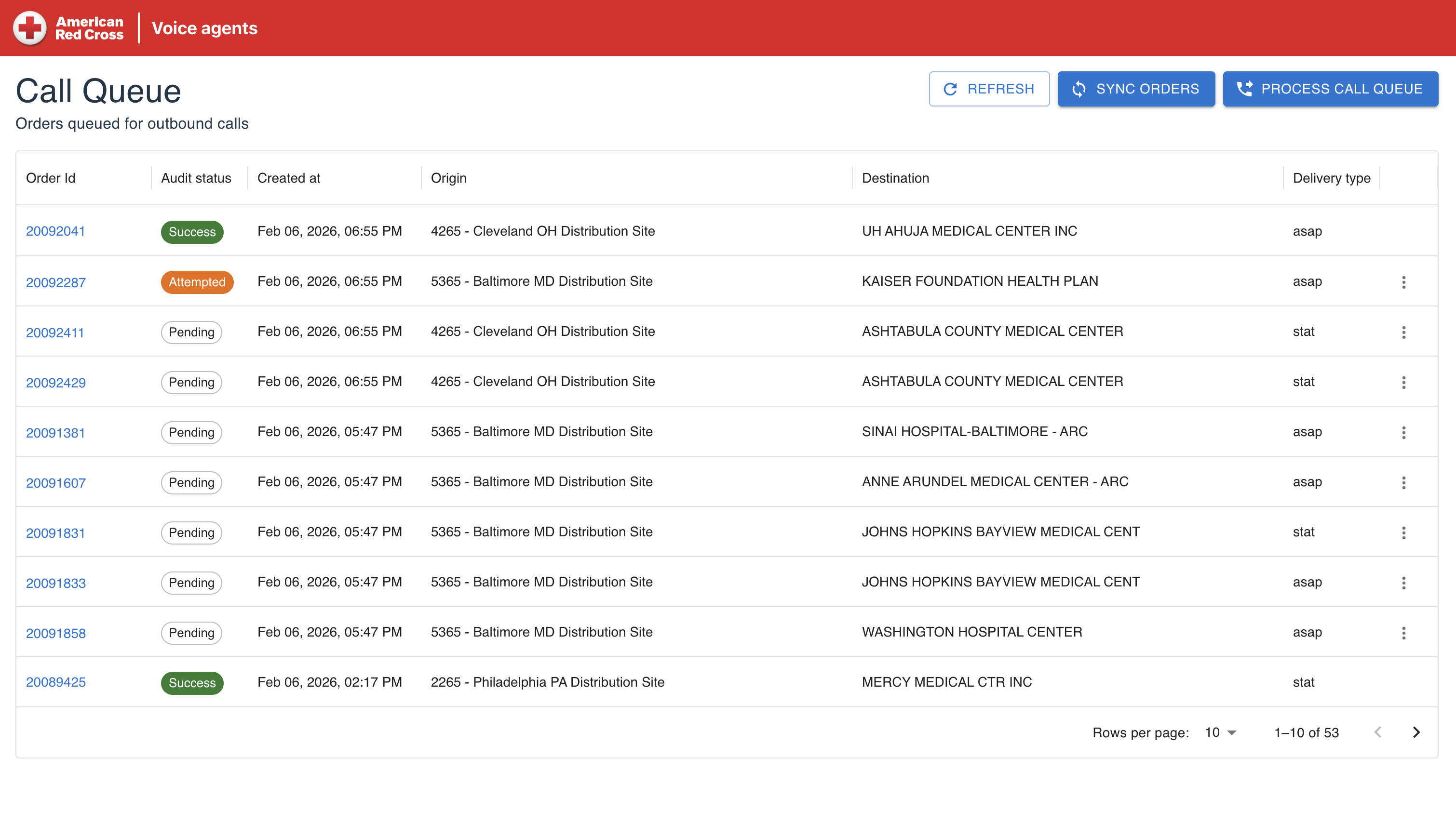
Order and call historySTAT and ASAP shipments from all three centres sit in one queue, STAT first. The same shipment cannot enter the queue from two centres: facility and shipment identifiers are compared before a call is placed.
Call queueAn operator opens the order and reads what the agent told the hospital and whether the hospital acknowledged it. A call that reached nobody is listed too.
Order and call historyOperators synchronise orders, process the queue and retry calls from the dashboard.
Call queueA queued shipment may need several call attempts. Each one has to stay on record, answered or not.
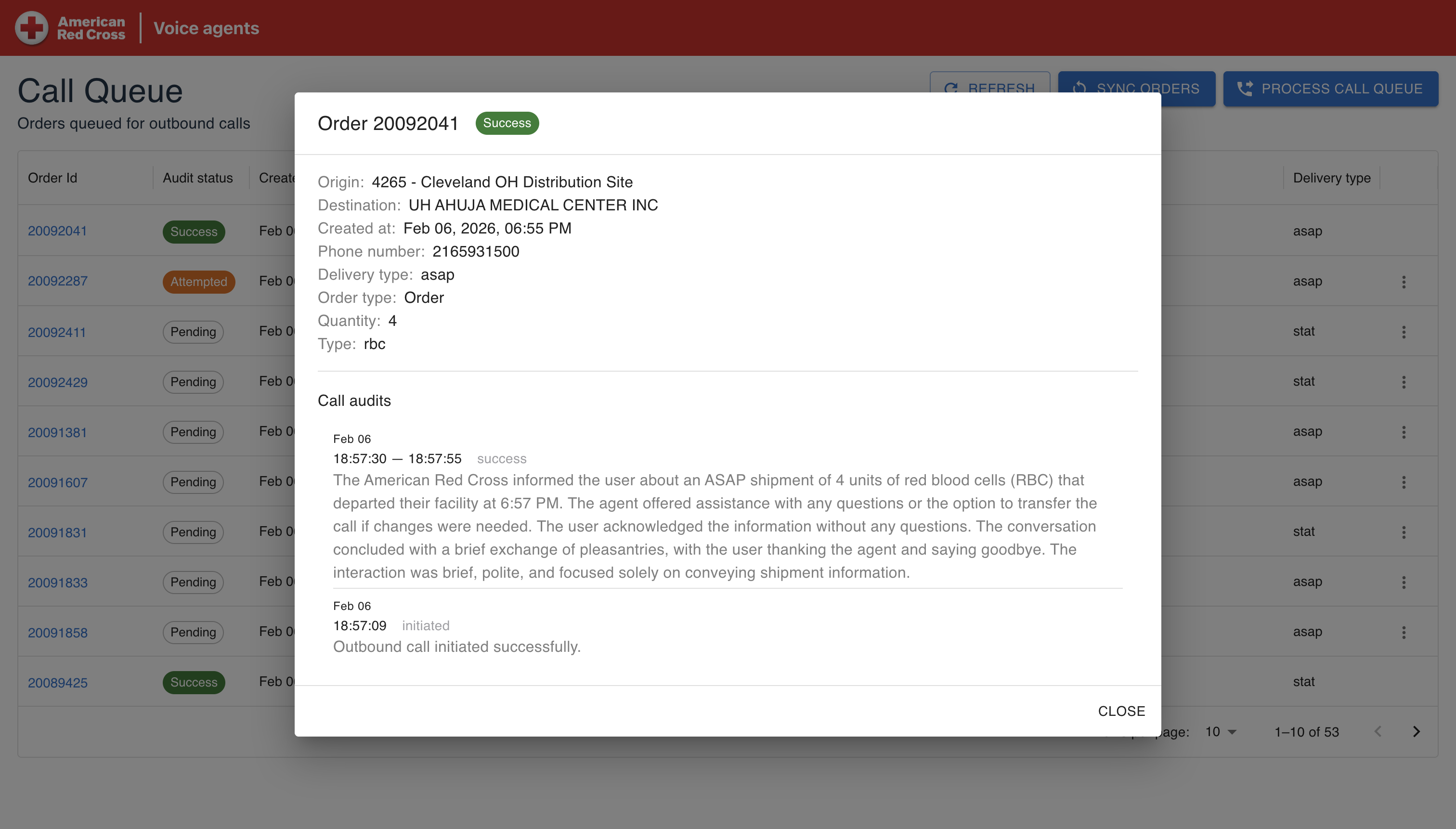
Every attempt is a separate entry in the order’s call history, with its own status and timestamps. A retry adds an entry and leaves the earlier ones in place. The operator reads the whole sequence before following up.
See the shipment and its call historyDescribe one call nobody answered and one that needed a follow-up. We will tell you what the queue should do with each and what the operator should see on the record.
When a hospital asks what it was told, or a shipment arrives unannounced, operators need the call record for that order.
Shipment details sit above the call log. In the record on screen, one entry marks the call as initiated and the next carries the summary: which shipment was announced, that the recipient acknowledged it and that they asked nothing.
REST APIs pull current shipment data from the logistics providers before each call: origin, destination, phone number, delivery type, quantity and product type. Operators can start a sync from the dashboard.
Dispatched orders join one queue, with STAT ahead of ASAP. Facility and shipment identifiers prevent duplicate entries from different centres. Retry attempts remain in the order’s call history with their own statuses.
An ElevenLabs agent with a Red Cross persona opens with the shipment summary, then answers repetition requests and follow-up questions and offers a transfer if changes are needed. Twilio carries the call.
The call queue lists order ID, audit status, time created, origin site, destination and delivery type, with Refresh, Sync Orders and Process Call Queue actions. An order opens into its details and call history.
Each attempt is logged with timestamps and a status from initiated to success, plus a written summary: which shipment was announced, whether the recipient acknowledged it, what they asked and any follow-up. Audit data is exportable for QA review.
An ElevenLabs agent on Twilio telephony, Fastify services with SQLite and a React dashboard.
The call queue and the order dialog, built with React, TypeScript and Material UI.
Twilio carries the calls. REST APIs pull shipment data from the logistics providers. The services run on Fastify with the AWS SDK.
SQLite stores the queue and the call audits.
An ElevenLabs agent with a Red Cross persona holds the conversation, using the order data.
The service was built for blood-product dispatch, but its parts, an order sync, a prioritised queue, a conversational agent and a call history, apply to any organisation that makes many similar calls a day:
Blood, pharmaceutical and medical-supply distributors announcing urgent and routine deliveries to hospitals and clinics.
Logistics and courier operators confirming delivery or collection with the receiving party, with priorities by service level.
Field-service companies announcing technician visits and handling the customer’s questions on the call.
Customer service desks that call back on open cases and need every attempt and its outcome recorded.
A pilot covers the queue, the conversation and the follow-up view together: the sync from your order system, one call scenario with the agent, the priority and deduplication rules, and the attempt history your operators review. We run it on a limited set of recipients before widening it.
Tell us which system holds your orders and how you mark the urgent ones. We will reply with what the agent would need from it and what your operators would see after each call.
Plan your notification service