Customer history and telephony
Customer records bring together previous orders and interactions. IP telephony connects calls with the information staff need to investigate a purchase enquiry.
Retail orders, customer history and stock in one CRM.
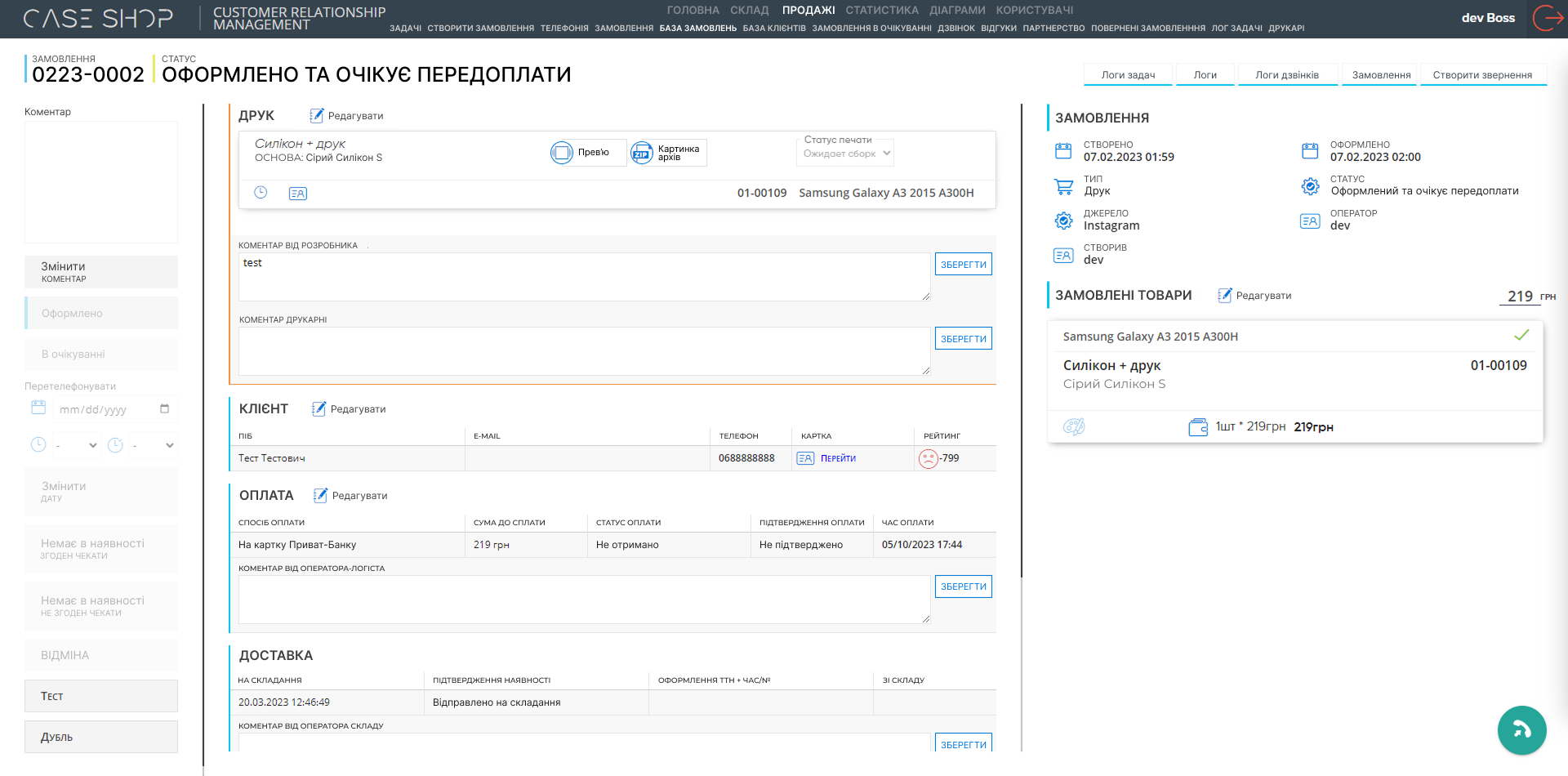
CaseShop needed sales, stock and customer information to work together. We built an operator workspace that connects retail orders with customer history, telephony, payment and delivery details.
Customer records bring together previous orders and interactions. IP telephony connects calls with the information staff need to investigate a purchase enquiry.
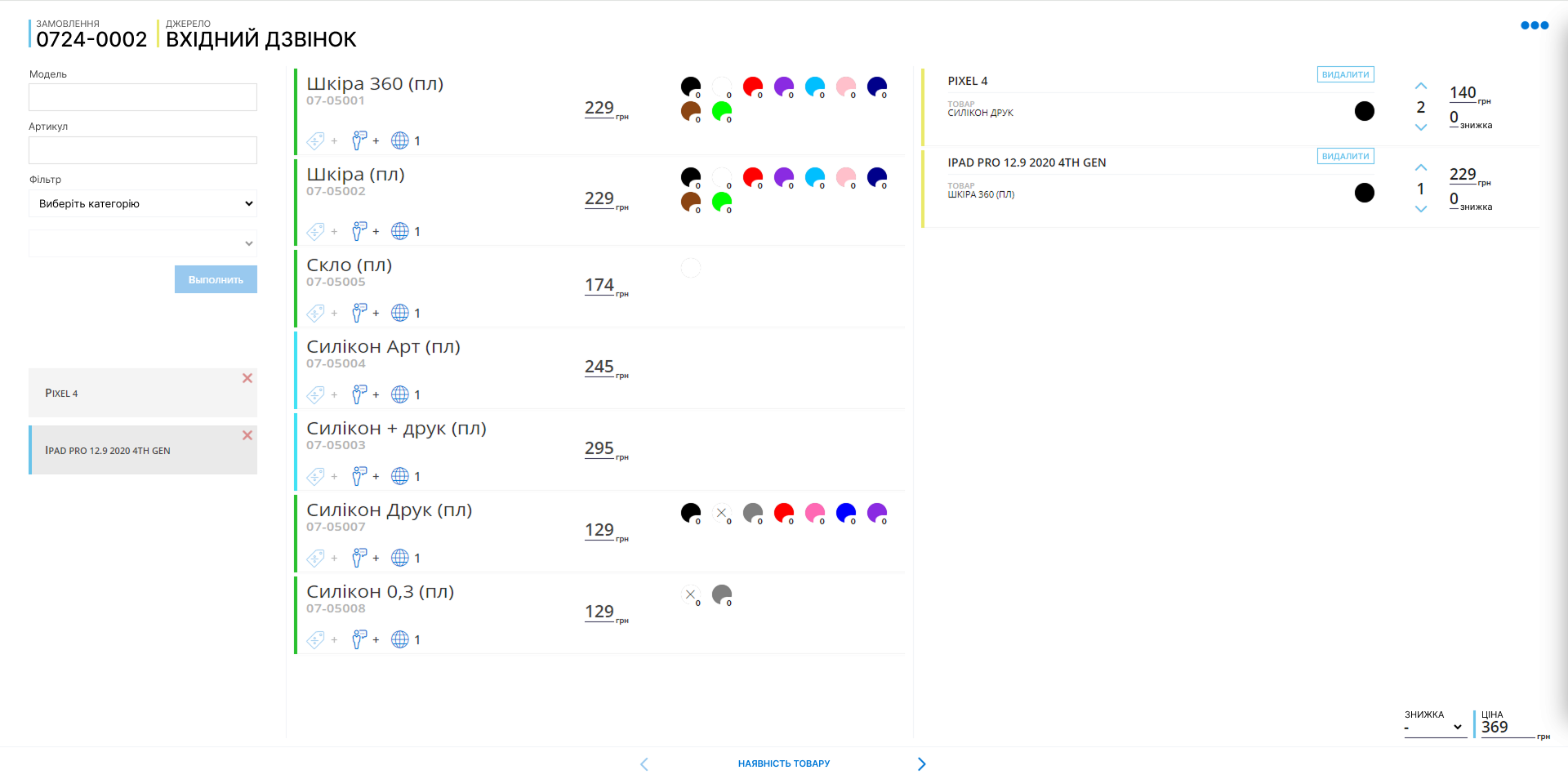
Filters by brand, phone model and product type narrow the selection. Operators compare available variants, colours and prices before adding items to the active order.
Print instructions, ordered items, payment and delivery details belong to the same order. Stage-specific comments preserve the information needed as the team prepares and fulfils it.
Return tracking and defect management extend the workspace beyond the sale. Staff handle these cases in the same platform used for customer, order and inventory records.
A web workspace, application API, relational database and cache for retail operations.
React provides the interface for working with customers, sales and inventory. TypeScript defines the interface code.
ASP.NET Core Web API connects the web interface with the application’s business logic and data.
Microsoft SQL Server provides the relational database for the CRM’s operational records.
Redis provides an in-memory cache for application data, reducing repeated database reads.
Variants, customisation, stock, returns and calls shape the operator’s job. We design around those details, starting with the task that currently requires the most switching between tools.
Discuss your CRM