
Auditing AI-Generated Codebases Before Production: Security and Stability
On this page
AI coding assistants and workflow builders let teams assemble working internal tools, customer portals and automations in days. The interface runs cleanly in a demo, API responses come back quickly, and the team prepares to move real customer or financial records onto it.
Then production traffic exposes what fast generation skips: server endpoints that never check object-level permissions, RAG pipelines that return restricted documents to the wrong role, third-party integrations that silently drop failed webhooks, and third-party packages with known vulnerabilities or missing lockfile discipline.
Writing code faster does not transfer accountability for data boundaries, access control or incident recovery. Before a company depends on an AI-assisted codebase or internal AI workflow in daily operations, senior engineers need a repeatable audit sequence that verifies security and operational stability against real failure modes.
Five failure classes that repeat in AI-assisted codebases
Across internal tools, customer-facing web apps and agentic workflows built rapidly with AI assistance, the same five defects appear far more often than syntax bugs:
- Authorization enforced only in the interface: buttons, tabs and menu links are hidden for restricted roles, while the underlying API route, server action or export endpoint accepts any authenticated session and returns another tenant's or department's records.
- Over-privileged AI connectors and unrestricted retrieval: an assistant queries a shared knowledge base, CRM or SQL view using a single service account, bypassing per-user access controls and exposing salary, contract or customer records to staff without permission.
- Swallowed exceptions and non-idempotent retries: generated
try/catchblocks return generic success responses or log errors to console without alerting anyone, while retry loops duplicate orders, invoices or outbound customer emails after a network timeout. - Insecure defaults and dependency drift: permissive CORS wildcards, hardcoded fallback tokens, missing payload limits, unpinned packages or outdated authentication libraries pass initial feature demos while opening direct attack surfaces.
- No recovery path or clear ownership: production shares credentials with staging, automated scripts run without spending caps or write kill-switches, and nobody has rehearsed database rollback or provider outage recovery.
Each of these defects stays invisible in happy-path demos. Finding them requires negative testing and architectural review rather than reading generated code at face value.
Verify server-side access and data boundaries first
Start every audit with the highest-impact risk: unauthorized read or write access across user roles and client tenants.
- Map every entry point: list every REST route, GraphQL resolver, Next.js server action, webhook receiver, background job and file download handler. Confirm how the caller's identity is established on the server from a verified session or signed token.
- Run negative authorization tests: for every sensitive record type (customer accounts, invoices, contracts, uploaded documents, admin settings), execute automated requests as a lower-privileged role and as a user from another organization. Confirm the server rejects both direct ID lookups and filtered exports.
- Check AI retrieval before context assembly: if the application uses Retrieval-Augmented Generation (RAG) or tool calling, enforce document and row-level permissions in the query layer before text enters the model prompt. Never rely on system-prompt instructions to withhold restricted data. Our enterprise RAG architecture guide details source indexing, metadata filters and freshness controls.
- Treat retrieved text as untrusted input: customer messages, uploaded PDFs and CRM notes can contain prompt-injection instructions designed to trigger tool calls or exfiltrate hidden context. Follow OWASP's Top 10 for LLM Applications by separating data from instructions, validating tool arguments against strict schemas and keeping high-impact writes behind explicit human approval.
See our data security and AI risk control scope for how we combine application code audits, access reviews and cryptographic authentication design (including OPAQUE password authentication) across production software.
Harden AI automations and external integrations
Once access boundaries hold, inspect how the system behaves when external APIs, model providers or user inputs misbehave.
- Idempotency on every state change: assign a stable request identifier to every order creation, payment update, CRM write and outbound notification. Repeating the same webhook or form submission must reconcile cleanly instead of creating duplicate records. Our CRM and ERP integration guide covers ownership, retry rules and reconciliation patterns.
- Visible failure queues instead of silent catches: replace empty
catchblocks with structured error states, retry limits and an internal exception queue owned by an operations or engineering contact. - Explicit action boundaries and spend caps: separate read-only retrieval from state-changing actions, set per-day token and API spend ceilings with alerts, and provide a single operational switch to pause writes while keeping read-only features available. For approving agent proposals safely, review AI agents in business operations.
- Secrets, rate limits and dependency hygiene: rotate any key that appeared in prompts, chat history or git commits; lock down secret managers per environment; enforce request rate limits and upload size/type checks on public endpoints; and audit lockfiles against abandoned or vulnerable packages.
Structured audit matrix: risk, verification and fix output
Use the matrix below to scope a pre-production security and stabilisation audit or an existing-application takeover review.
| Audit area | Typical production risk | Required verification check | Concrete remediation output |
|---|---|---|---|
| Auth and tenant isolation | Cross-account data exposure (IDOR / BOLA) via unguarded API routes or exports. | Automated negative tests across every role and tenant boundary on reads, writes and downloads. | Server-side policy middleware, tenant-scoped queries and regression test suite in CI. |
| AI retrieval and tools | Restricted internal documents leaked into answers or unauthorized tool executions. | Permission-mismatch queries and prompt-injection test cases against staging sources. | Pre-retrieval access filters, strict tool schemas, approval gates and source citations. |
| Integrations and retries | Duplicate records, lost webhooks or silent sync drift between CRM, ERP and billing. | Simulated timeout, duplicate-delivery and partial-failure replays against sandbox APIs. | Idempotency keys, transactional outbox or retry queue and operator exception view. |
| Dependencies and secrets | Exposed API tokens, vulnerable packages or permissive CORS and header defaults. | Git-history secret scan, lockfile vulnerability review and HTTP security header inspection. | Rotated secrets in environment vaults, pinned dependencies and hardened CSP/CORS headers. |
| Operations and recovery | Unnoticed outages, runaway model costs or broken rollbacks after a release. | Timed backup restoration rehearsal, spend-cap trigger test and alert routing check. | Environment separation, append-only audit logs, spend alerts and documented runbook. |
Download the AI codebase security audit checklist
Use this plain-text worksheet with your engineering lead or external auditor to record inspected repositories, negative test evidence, release blockers and the sign-off decision before production launch or application handover.
Record security and stability evidence before launch
Use the checklist to verify repositories, server-side permissions, AI data boundaries, error handling and recovery before putting an AI-assisted codebase into production.
- System inventory, API keys and kill-switch ownership
- Server-side authorization, tenant isolation and prompt-injection checks
- Idempotency, exception queues, backups and release sign-off
Grounded engineering references
Controlling AI boundaries and stabilising production codebases require different proof from building a quick prototype:
- Controlled enterprise AI retrieval: on the ARC SupplyChain and ServiceDelivery Virtual Assistants, separate domain assistants answer staff questions strictly from approved internal documents, link every response back to verifiable source pages and capture user feedback for ongoing quality checks.
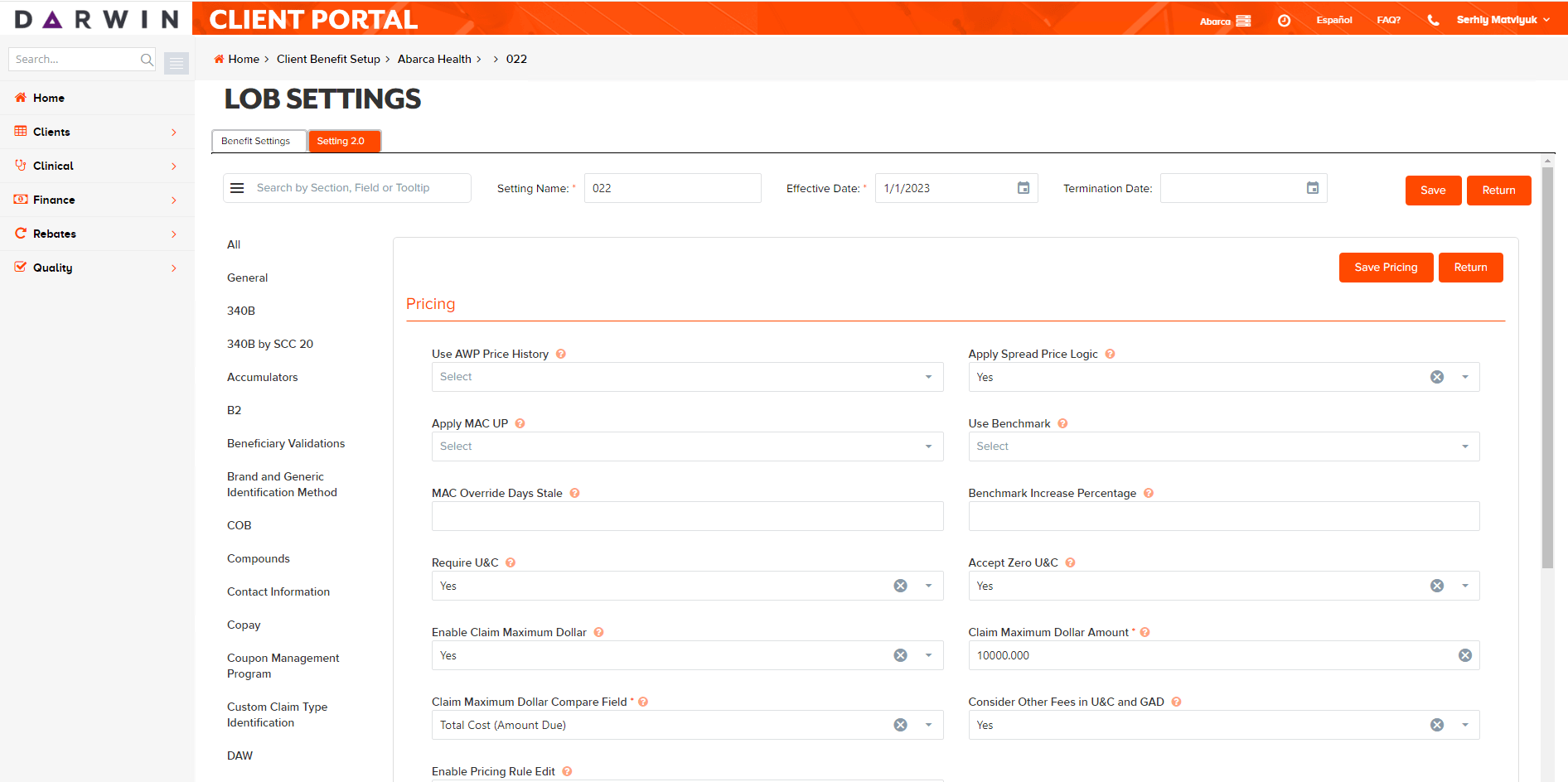
- Stabilising complex production applications: on DARWIN, our team analysed an existing insurance architecture and delivery process before modernising 120 benefit-configuration screens from ASP.NET Web Forms to Angular and .NET while keeping the live claims engine running without operational interruption.
Stabilisation sequence: audit, harden, handover or support
You do not need to rewrite a working AI-assisted application from scratch to make it safe for production. A controlled stabilisation sequence separates discovery from remediation so you approve every step on evidence:
- Paid initial audit and risk record: inspect repositories, architecture, permissions, AI connectors, dependencies and hosting access; classify findings into production blockers, sprint-one fixes and accepted limitations.
- Targeted hardening sprint: close access bypasses, add negative security tests, introduce idempotency and error queues, lock down secrets and isolate staging from production.
- Handover or ongoing support: either hand back a documented, tested codebase to your internal team (or work alongside them via senior multi-disciplinary team extension), or transition into agreed application support and maintenance with clear incident ownership.
If your team built software or internal automations with AI tools and needs an independent pre-production audit, stabilisation plan or structured takeover, describe your stack, workflow and key risks. You can also review our controlled AI solutions and pricing and engagement structure.
Related project experience.

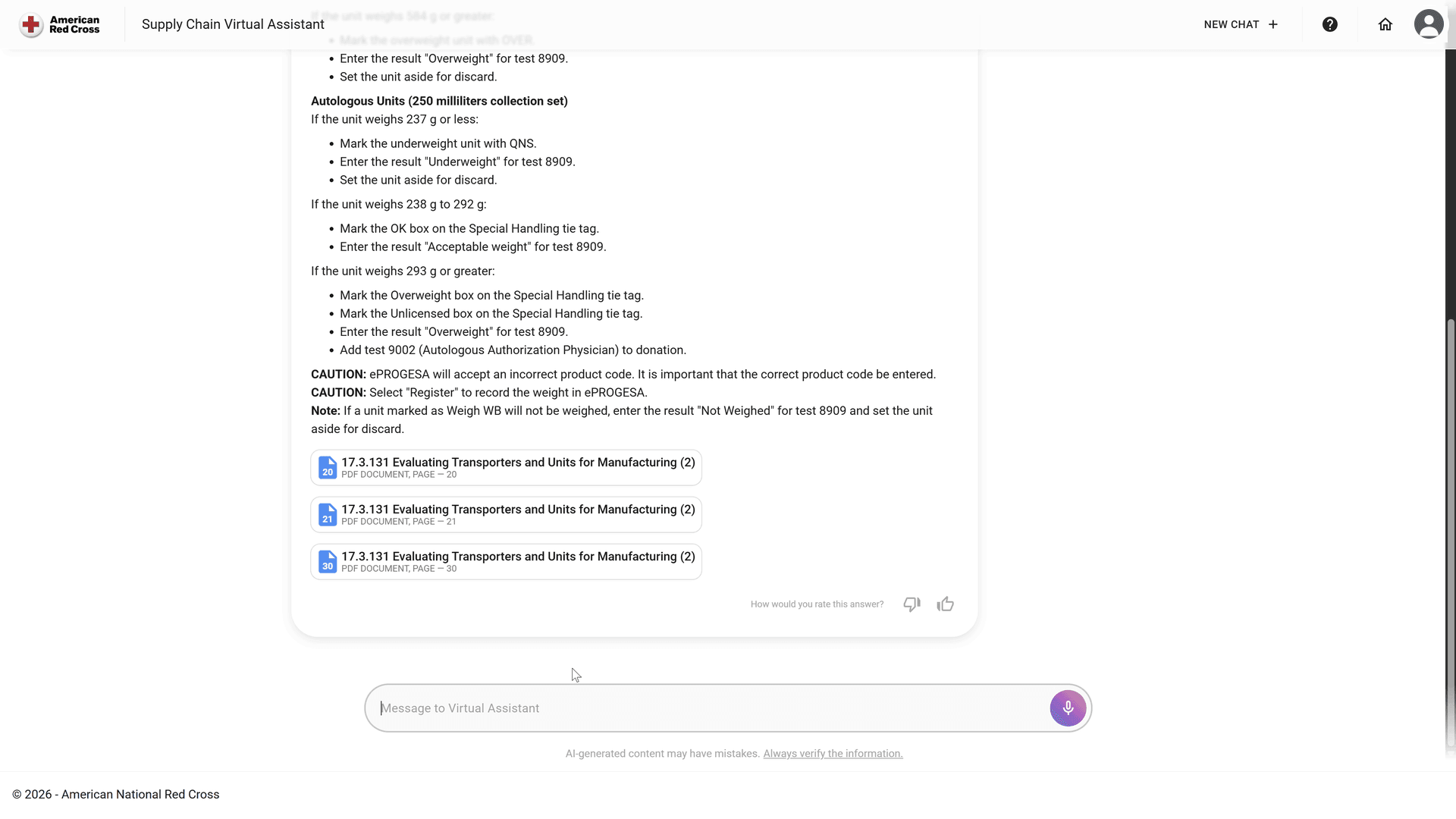
ARC SupplyChain/ServiceDelivery Virtual Assistants
Document retrieval and answers linked to knowledge-base sources.
View project