
A buyer narrows the search by region and keeps it
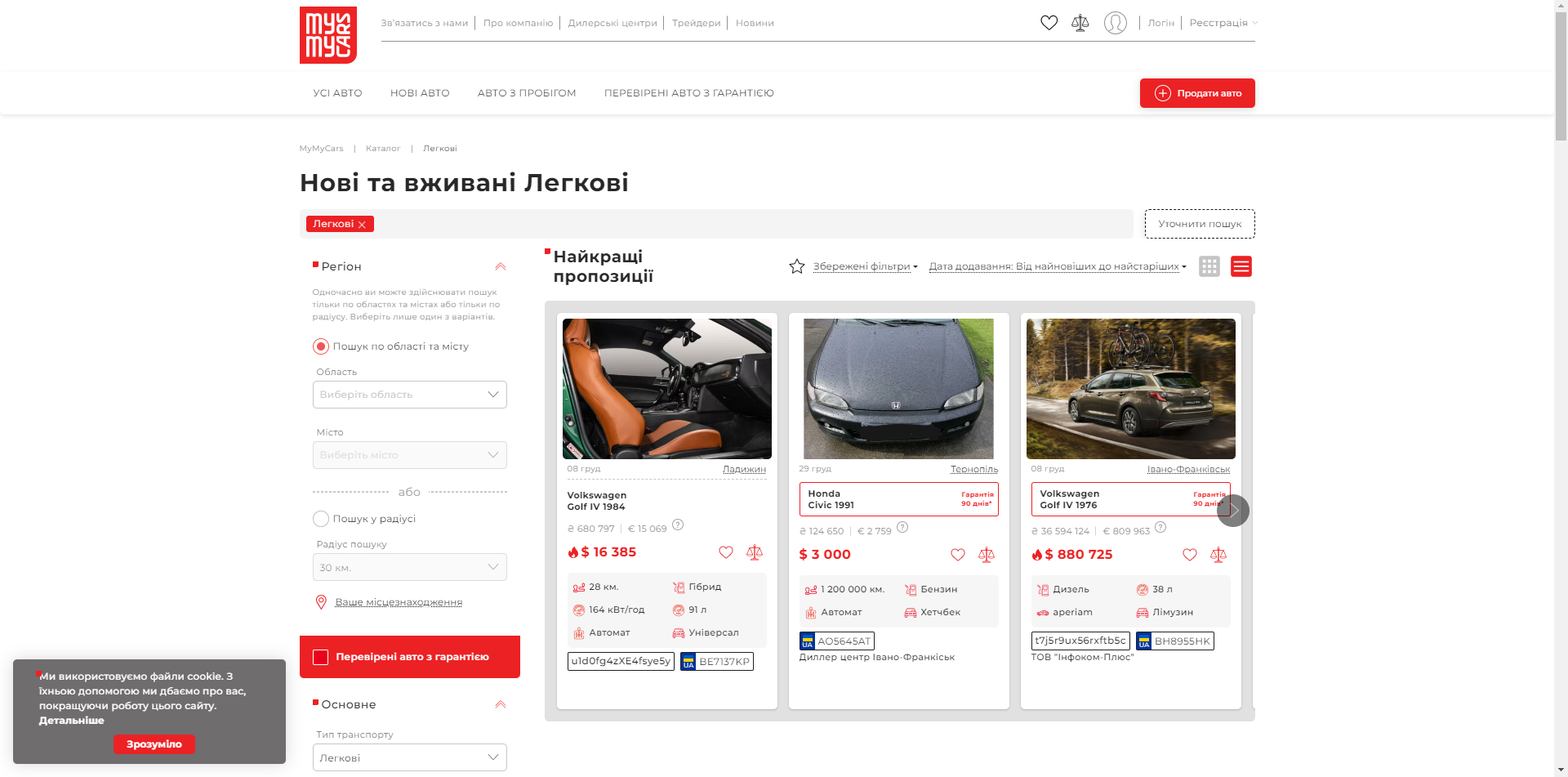
Region, city or radius filters sit beside the results. The saved filter brings the buyer back to the same search.
Catalogue and saved filtersWe developed the web platform of MyMyCars, a car marketplace in Ukraine for buyers, dealers and private sellers. It has a catalogue with regional filters, car listings with the seller’s contact and a finance enquiry, and a page for every dealer.
What buyers and dealers getDeveloped in 2021–2022
The marketplace set out to fix three things in online car sales: scattered information about a car, sellers a buyer cannot rely on and financing that is complicated to arrange.
A buyer needs enough detail to shortlist a car and to know who is selling it. A dealer needs one recognisable page for a stock that keeps changing.
Development of the web platform: catalogue, car pages, dealer pages, accounts and the services behind them.
On this marketplace the users are car buyers on one side and dealers, traders and private sellers on the other.
Region, city or radius filters sit beside the results. The saved filter brings the buyer back to the same search.
Catalogue and saved filtersEach listing names the seller, with a call button and a link to the seller’s other cars.
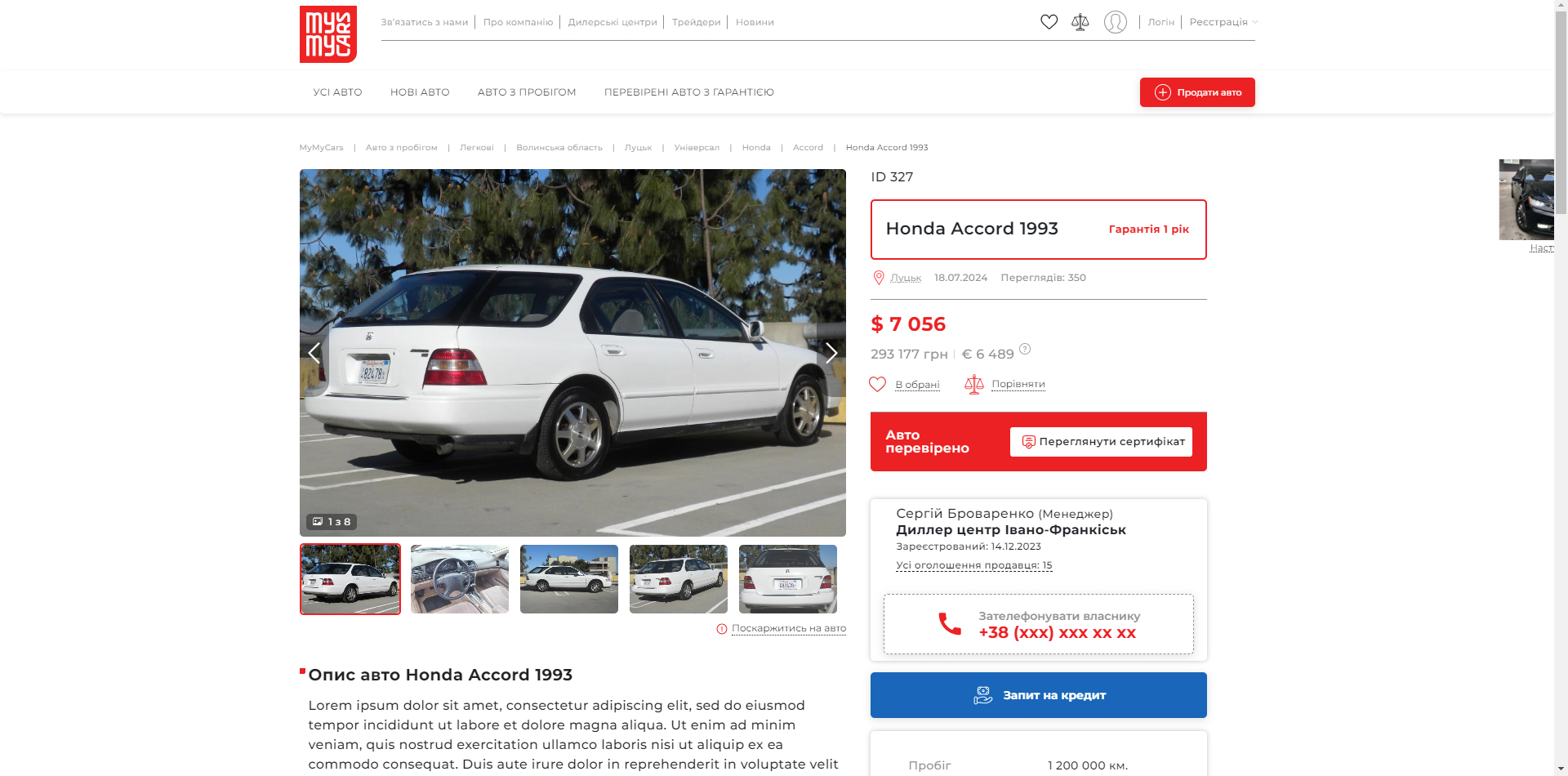
Car page and seller contactStock, contacts and promotions with dates are on the dealer’s page, and past promotions are marked as archived instead of being deleted.
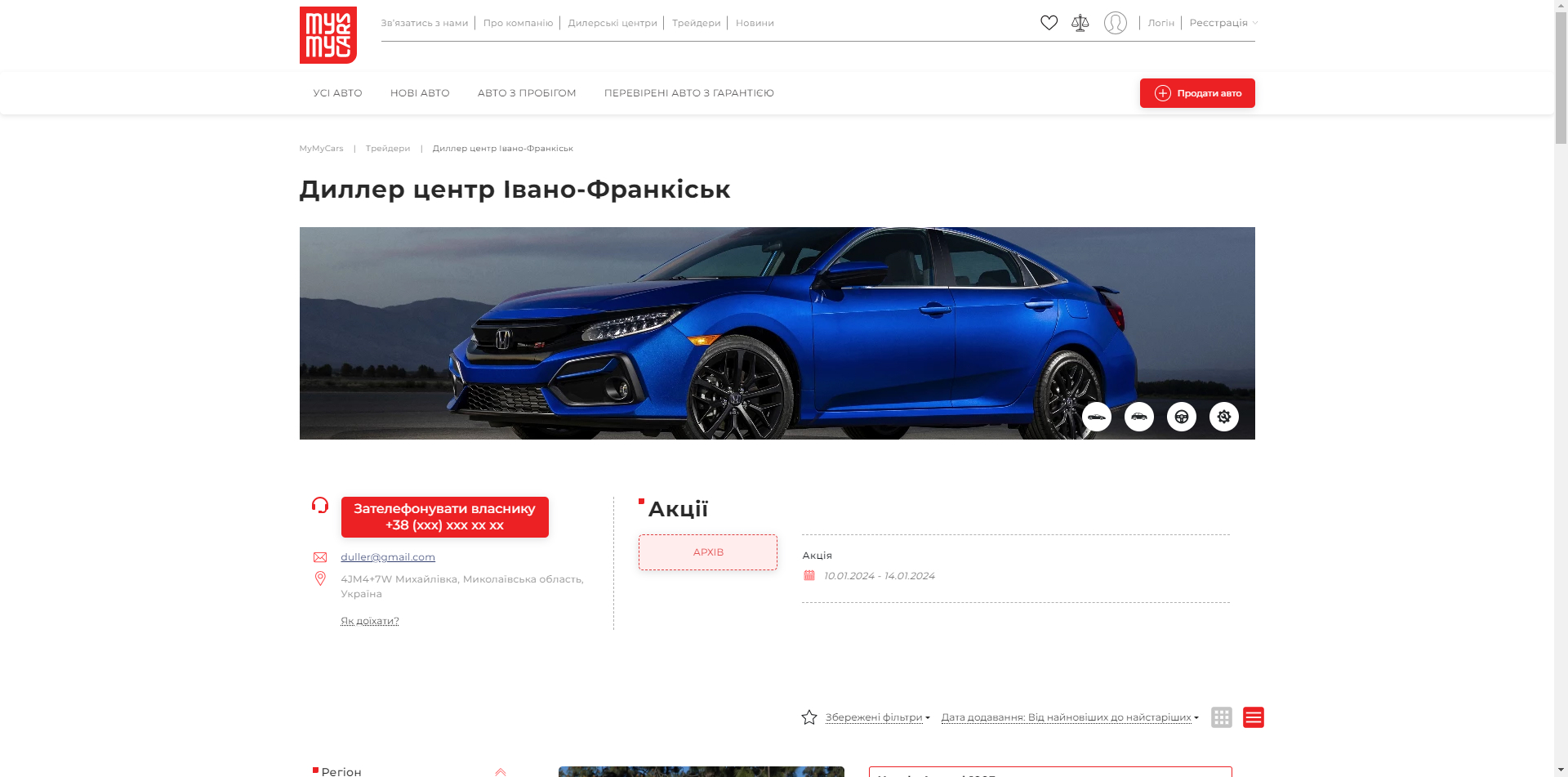
Dealer pageThe finance enquiry is sent from the listing, so the request names the car and the seller.
Car page and seller contactOn a marketplace the buyer does not know the seller. A phone number alone does not say whose car it is or whether anyone has checked it.
Every listing has a seller card: the manager’s name, the dealer centre, the date it registered and a link to all its listings. A car that passed verification gets a warranty badge and a certificate that opens from the listing.
Inspect the vehicle page and seller contactTell us what buyers ask your sellers before they agree to call or visit. We will tell you what the listing page should answer and what the seller has to fill in.
A buyer wants cars from a particular region, with enough detail on each card to shortlist a few without opening every listing.
Each card shows the photo, the city, the price in three currencies, mileage, fuel, gearbox and body type, with save and compare buttons. Results switch between a grid and a list and are sorted by date added.
Sections for all cars, new, used and verified cars with a warranty. Filters by region and city or by a radius from the buyer’s location, then by vehicle type and specification. Results are shown as a grid or a list, sorted by date added. A buyer saves a filter and returns to the same search later.
Each card shows photos, the date and city, make, model and year, the price in three currencies, mileage, fuel, power, engine volume, gearbox, body type, the plate and the seller. The listing adds the gallery, views, a description, the full specification and a link to report the car.
A verified car carries a warranty badge and a certificate the buyer opens from the listing. A finance enquiry is sent from the same page.
The seller card names the manager, the dealer centre, its registration date and all its listings, with a call button. A dealer page has a banner, phone, email, address and directions, promotions with their dates, with expired ones marked as archived, and the cars in stock with the same filters.
Save and compare buttons on every card and listing, with favourites and comparison in the header. Login and registration, a sell-a-car entry point, lists of dealer centres and traders, and news.
A Vue.js front end on an ASP.NET Core Web API, with PostgreSQL, hosted on AWS.
The catalogue, listings and dealer pages are written in Vue.js and TypeScript, with Vuex for state.
The API is written in C# on ASP.NET Core Web API.
Data is stored in PostgreSQL. Entity Framework Core, Dapper and SQL are used for data access.
Hosted on AWS.
The platform was built for one car marketplace, but its rules are common to marketplaces for high-value goods:
Dealer groups and dealer networks that want a shared catalogue with a page for each dealership.
Marketplaces for new and used cars, motorcycles or commercial vehicles with dealer and private sellers.
Marketplaces for property, machinery or equipment, where buyers compare across regions and call the seller.
Inspection and finance partners that attach certificates and credit enquiries to listings.
A first release usually covers the catalogue with filters, the listing page and seller contact; dealer pages, comparison and finance enquiries follow.
Send us your product data and how buyers choose today. We will suggest the filters, product page and seller account for the first release.
Plan your marketplace